What is FIRST Robotics?
- FIRST is a global robotics program that inspires young people to engage in science, technology, engineering, and mathematics through robotics competitions.
- Founded by inventor Dean Kamen, FIRST (For Inspiration and Recognition of Science and Technology) aims to cultivate interest in these fields by encouraging teamwork, creativity, and problem-solving.
- The program consists of various divisions, including the FIRST Robotics Competition (FRC) for high school students and the FIRST Tech Challenge (FTC) for middle and high school students, where participants design, build, and program robots to compete in annual challenges.
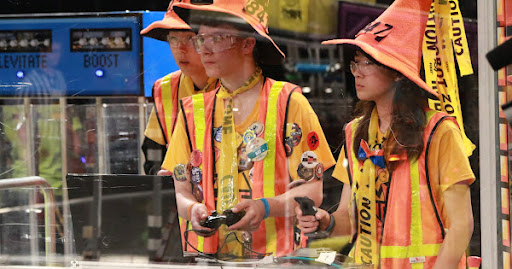
FIRST Robotics Competition (FRC)
- Overview FRC is a high-school-level robotics competition that involves designing, building, and programming a robot to compete in an annual game challenge.
- Team Composition Teams typically consist of 10-25 students and adult mentors.
- Robot Size Robots can weigh up to 125 pounds and must fit within a specified volume.
- Competition Style FRC events feature large-scale competitions, often held in arenas, where teams compete in alliances to score points based on the game’s objectives.
- Focus Areas FRC emphasizes engineering principles, teamwork, and project management, offering students hands-on experience in various fields, including robotics, programming, and design.
FIRST Tech Challenge (FTC)
- Overview FTC is geared towards middle and high school students, focusing on smaller-scale robotics competitions. Teams design, build, and program robots to compete in an annual challenge.
- Team Composition Teams usually consist of 5-15 students, supported by mentors.
- Robot Size Robots must fit within an 18-inch cube and can weigh up to 30 pounds.
- Competition Style FTC events are typically conducted on smaller fields, and robots compete in matches to achieve specific tasks related to the game’s theme.
- Focus Areas FTC encourages students to develop skills in programming, engineering, and strategy, allowing for greater flexibility in robot design and innovation.

.png)
.svg.png)